
 English
 Italian
 Korean
 Japanese
 Polish
Plasticiser series



- Product details
- COA
- MSDS
- TDS
- FAQ
-
Product Name N-Butyl Benzene Sulfonamide ( BBSA ) Synonyms: N-Butylbenzenesulfonamide; N-Butyl benzene sulphonamide; N-BUTYL BENZENE SULFONAMIDE; N-BBSA; BBSA; N-Buthyl Benzensulfonamide; N-butylbenzenesulfonamide(NBBSA) CAS NO. 3622-84-2 Molecular formula C10H15NO2S
Molecular structure 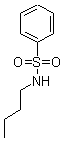
Packing 200kg iron drum Product usage It's a kind of excellent polyamide resin & cellulose class of liquid plasticizer, mainly as a plasticizer to be used in nylon plastic, and also can be used for hot melt adhesives, rubber latex adhesives, printing ink and surface coating.
REACH Registration YES Class or division Dangerous GoodsUN NumberPacking GroupG/C---- H.S.CODE 2935009090 Contact Jessica Xuan
Tel:0086-573-82030555
E-mail:Jessica@chinatrustworthy.com -
Check-Point Unit Specifications Appearance - Clear Liquid Purity % min 99.5 Acid Value KOHmg/g 0.1 Water % max 0.1 Colority (APHA) Pt/Co max 20 Chloride ppm max 100 PH - 7-8 Density g/cm3 1.145-1.152 Refaractive Index(20℃) - 1.520-1.526 -
Safety and Handling of N-Butyl Benzene Sulfonamide
Like other sulfonamide compounds, N-butyl benzene sulfonamide requires careful handling and safety precautions to minimize risks associated with exposure.
Health and Safety Precautions: N-Butyl Benzene Sulfonamide is considered to have low toxicity. However, it may cause irritation to the skin, eyes, or respiratory system upon contact. Proper personal protective equipment (PPE), including gloves, goggles, and respiratory protection, should be used when handling this chemical. In case of accidental exposure, rinse the affected area with plenty of water and seek medical attention if necessary.
Fire and Explosion Risks: N-Butyl Benzene Sulfonamide is not considered highly flammable, but it should still be stored in a cool, dry place, away from heat sources and open flames. Like most organic chemicals, it can decompose when exposed to extreme conditions, so proper storage is essential.
Environmental Impact: Dispose of N-butyl benzene sulfonamide and its derivatives according to local environmental regulations. While the compound is not considered highly hazardous to aquatic life, it is important to avoid release into the environment.